

If cold air is coming through your front door, it usually means that your home’s thermal barrier has been compromised in some way. Your front door is supposed to act as a seal between the inside of your heated home and the outside environment, but over time that seal can weaken. When this happens, even small gaps can allow noticeable amounts of cold air to enter, making your home less comfortable and increasing your heating costs. In this blog, we’ll help you understand the causes of this problem and take a step toward to fixing it effectively.
One of the most common reasons for cold air entering through a front door is worn or damaged sealing material. Most modern doors rely on rubber or foam seals fitted around the frame to prevent air leakage. These seals are designed to compress when the door is closed, forming a tight barrier against drafts.
Over time, however, these materials naturally degrade. They can become brittle due to exposure to temperature changes, or they may lose their shape after years of repeated compression. In some cases, sections of the seal may even detach from the frame completely. When this happens, small gaps are created that allow cold air to pass through easily.
You can often detect this issue by slowly moving your hand around the edge of a closed door. If you feel a noticeable drop in temperature or a light airflow, it is a strong indication that the seals are no longer functioning properly.
Another major cause of draughty front doors is poor installation or gradual misalignment over time. If a door has not been fitted correctly, it may never have formed a proper seal from the beginning. Even a small error in alignment can create consistent gaps around the frame.
In other cases, a door that was once properly fitted can shift slightly due to natural movement in the building structure. Houses settle over time, and this movement can affect the alignment of door frames. As a result, the door may no longer sit evenly, and small gaps can form along the edges.
Signs of this issue often include difficulty closing the door smoothly or the need to lift or push it slightly to engage the lock. You may also notice uneven spacing around the door when it is closed. Fixing this problem typically requires adjusting the hinges or, in more severe cases, having the frame professionally realigned.
Cold air entering beneath the door is another very common issue. The bottom of a door is particularly vulnerable because it experiences constant movement and wear. Most doors are fitted with a threshold seal or a draught excluder designed to block airflow at floor level.
When this component becomes worn or damaged, a direct pathway for cold air is created. Even a very small gap beneath the door can allow a steady stream of cold air to enter, which can be especially noticeable in winter months.
In many cases, replacing or adding a new door sweep or threshold seal is enough to solve the issue effectively.
Warping is another factor that can contribute to draughts around a front door. This is particularly common in timber doors, which naturally respond to changes in moisture and temperature. As the material expands and contracts over time, the door may begin to lose its original shape.
When a door warps, it may no longer sit flush within its frame. This creates uneven gaps that can allow cold air to pass through. In some cases, the problem may only be noticeable during certain seasons when temperature changes are more extreme.
You might also notice additional symptoms such as the door sticking when you try to open or close it or the latch no longer aligning properly. Minor warping can sometimes be corrected by adjusting the hinges, but more severe cases may require replacement of the door itself.
Older front doors are often far less efficient than modern designs. Many older doors were not built with energy efficiency in mind and may lack proper insulation. As a result, they are more prone to heat loss and cold air penetration.
This is especially true for older wooden doors or early-generation uPVC doors that do not contain insulated cores. Even if the door appears solid, it may still allow significant heat transfer through the material itself.
In these situations, upgrading to a modern insulated door that is designed to meet current energy efficiency standards is the best choice.
Sometimes the problem is not the door itself but the frame surrounding it. Over time, small gaps can develop between the frame and the wall due to building movement or deterioration of the original sealant.
When this happens, cold air can bypass the door entirely by entering through these hidden gaps. This type of issue can be more difficult to detect because the air does not always come directly through the visible edges of the door.
You may notice cold spots along the surrounding wall or feel draughts coming from the sides of the frame. In these cases, resealing the frame with appropriate materials such as expanding foam or exterior-grade sealant can significantly reduce air leakage.
The threshold at the base of the door plays an important role in sealing the entrance to your home. If the threshold becomes damaged, worn, or improperly fitted, it can create a gap that allows cold air to enter.
This part of the door is particularly exposed to foot traffic and weather conditions, which means it often deteriorates faster than other components. Water damage can also contribute to weakening the structure over time.
When the threshold is no longer effective, replacing it can restore the seal and improve insulation. A properly fitted threshold helps prevent not only cold air but also moisture and debris from entering the home.
It is also important to understand that some level of movement in door structures is completely natural. Materials expand in warm weather and contract in cold weather, which can temporarily affect how well a door seals.
This means that a door that feels perfectly sealed in summer may develop slight gaps during winter. These seasonal changes are especially common in wooden doors but can also affect other materials to a lesser extent.
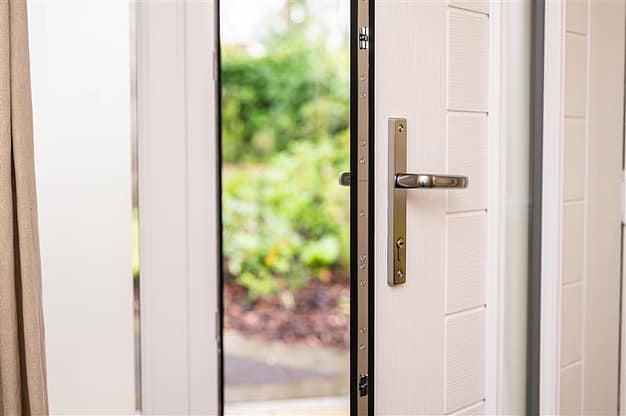
Front doors that let in cold air are usually caused by a combination of smaller issues rather than a single major fault. Worn seals, slight misalignment, ageing materials, and natural structural movement can all play a part in reducing insulation and comfort.
If your door is older or the issues are more severe, upgrading to a modern energy-efficient replacement can be the most effective long-term solution. At UK Doors Online, we offer a wide range of high-performance composite doors. To find out more, call us on 01924 929600 today, or design your unique door on our online portal.
If you’ve been researching aluminium windows and doors, you’ve probably come across the term thermal break. It’s a feature...
Large windows have become one of the most desirable features in modern homes, offering uninterrupted views, an abundance of...