

When choosing new windows, there are several factors to consider. Style, material, colour and security all play a part, but thermal performance is just as important. One of the key measurements to look at when comparing the energy efficiency of windows is the U-value. But what is considered a good U-value for windows?
A U-value measures how quickly heat passes through a building element. For windows, this means how much heat can transfer through the window from the warmer side to the colder side. U-values are measured in W/(m²K), or watts per square metre Kelvin.
The lower the U-value, the better the thermal performance. For example, a window with a U-value of 1.0 W/(m²K) will generally provide better thermal insulation than a window with a U-value of 1.4 W/(m²K). This is because the lower figure indicates that less heat is passing through the window.
When comparing window products, it is therefore important not to assume that a higher number means better performance. With U-values, lower is better.
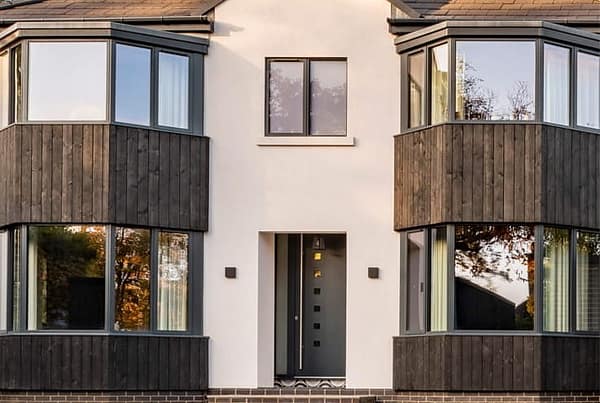
A window with good thermal performance can help reduce heat transfer between the inside and outside of a property. This can contribute to a more comfortable internal temperature and support overall energy efficiency.
A replacement window for an existing property may have different requirements from windows specified for a new-build development. The property’s design, location, orientation, building regulations and overall specification can all influence which window and glazing combination is suitable.
There is no single U-value that is suitable for every project.
However, as a general guide, a U-value around 1.0 W/(m²K) is considered a strong level of thermal performance for many modern window applications. Some high-performance window and glazing combinations can achieve even lower figures, depending on the system and specification.
Triple glazing uses three panes of glass rather than two, creating additional sealed cavities within the glazing unit.
This can allow triple-glazed windows to achieve lower U-values than many double-glazed alternatives. However, adding another pane of glass does not automatically mean that every triple-glazed window will outperform every double-glazed window.
The overall specification still matters. The type of glass and frame design can all affect thermal performance. Triple glazing can therefore be useful where particularly high levels of thermal performance are required, but it should be considered as part of the wider window specification.
The U-value of a window isn’t determined by the glass alone. Several components work together to determine the thermal performance of the finished product.
The material and design of the frame can have a significant impact on thermal performance.
Modern aluminium window systems feature a thermally broken frame which separates the internal and external parts of the profile, reducing the direct path for heat transfer. This allows aluminium windows to combine slim sightlines and strong thermal performance.
The glass used within a window also has a major influence on its U-value.
Depending on the project requirements, different types of glass can be specified to achieve the desired combination of thermal performance, solar control, privacy, acoustic performance and appearance.
If thermal performance is a priority, there are several aspects of the specification that can be considered.
First, choose a modern window system designed with thermal performance in mind. The frame should provide suitable insulation and, where aluminium is used, a thermal break can help reduce heat transfer through the profile.
Next, consider the glazing specification. Energy-efficient glass can improve the thermal performance of the complete window.
For many modern applications, a whole-window U-value around 1.0 W/(m²K) represents a strong level of thermal performance. However, the appropriate specification will depend on factors such as the property, building design, glazing area and applicable requirements.
If you’re looking for aluminium windows that combine modern aesthetics with strong thermal performance, we can help.
Our aluminium windows can offer U-values as low as 1.0 W/(m²K) when combined with energy-efficient glass. Get in touch with us today on 01924 929600 to find out more about our range.
Garden rooms have become one of the most popular ways to add extra living space without the disruption of...
When choosing new windows, there are several factors to consider. Style, material, colour and security all play a part,...